Nadia Comăneci's Perfect 10
The score the scoreboard could not show. At Montreal 1976 a 14-year-old gymnast earned the first perfect 10 in Olympic history, and the scoreboard could only display it as 1.00.
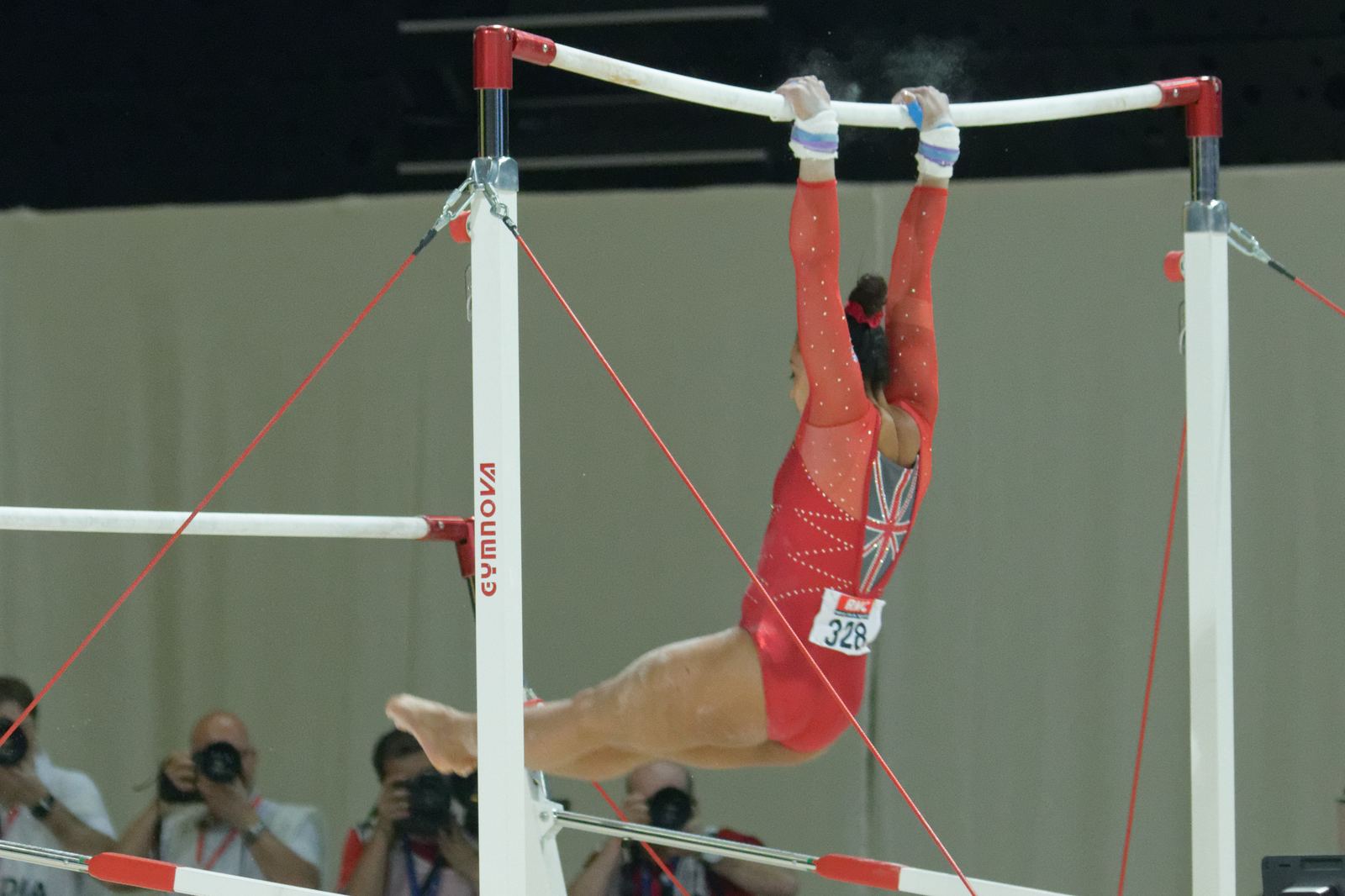
On the uneven bars: Pierre-Yves Beaudouin, CC BY-SA 4.0
A girl from Onesti
Nadia Comăneci was born in 1961 in Onesti, a small town in Romania. She started training seriously at about the age of seven at a new gymnastics school in her town, coached by Bela and Marta Karolyi.
By the spring of 1976 she was already winning top events, including the first American Cup in New York, where judges gave her rare scores of 10. Even so, few people outside the sport knew her name when she arrived in Montreal for the Olympic Games.
1.00 on the board
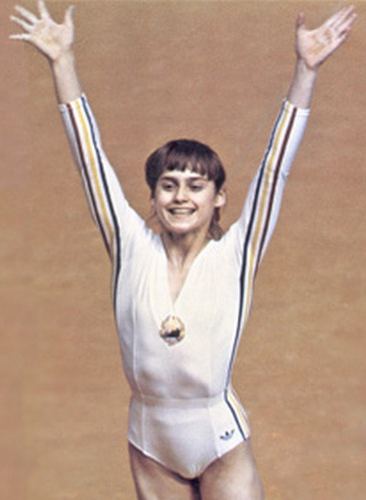
On 18 July 1976, during the team compulsory round, Comăneci swung through her routine on the uneven bars without a single fault the judges could find. They awarded a perfect 10, the first ever given at the Olympics.
The scoreboard had been built to show only three digits, because a perfect score was thought to be almost impossible. So the crowd in the Montreal Forum saw 1.00 light up. For a moment there was confusion, then the arena understood what had happened.
Seven perfect scores
It was not a one-off. Over the rest of the Games she earned six more 10s. She won gold in the all-around, on the balance beam and on the uneven bars, plus a silver with the team and a bronze on the floor. Her rival Nellie Kim also scored a 10 on vault, becoming the second gymnast to do so.
Comăneci remains the youngest Olympic all-around gymnastics champion. Because the minimum age has since been raised to 16, that record is unlikely ever to be broken.
Life after the perfect 10
She won two more Olympic golds at the 1980 Games and finished her career with nine Olympic medals. She later moved to the United States, married the American Olympic champion Bart Conner, and has spent decades promoting the sport.
The perfect 10 itself is now history. In 2006 gymnastics moved to an open-ended scoring system that adds difficulty and execution scores, so there is no longer a fixed top mark. That makes the 1.00 on the Montreal scoreboard even more special.
Why bars routines are so hard
The uneven bars ask a gymnast to swing, release, fly and catch again, all while keeping legs straight and toes pointed. Every bent knee, extra swing or step on landing costs points.
That is what made a perfect score so rare in 1976. Judges had to see no faults at all, from the first grip to the final landing. Comaneci did it on the bars and on the beam, again and again.
- On the uneven bars: Pierre-Yves Beaudouin, CC BY-SA 4.0
- Montreal, 1976: Unknown (Comitetul Olimpic si Sportiv Roman), Public domain
Text written by Shining Champion.